Updated 25 October 2026 - for UK restaurants, cafes, pubs, takeaways, food vans and home caterers
Every restaurant, cafe, pub or takeaway needs enough hand basins, in the right places, kept for washing hands only, each with hot and cold running water, soap and a hygienic way to dry hands. Food law sets no number of basins or sinks: your council's food team judges what is enough for your kitchen. Food vans, stalls and kitchens at home have a shorter rule, and councils differ on what they accept.
Law in all four nations For a restaurant, cafe, pub or takeaway, the law asks for enough hand basins, in suitable places, kept for cleaning hands. Each needs hot and cold running water, something to clean hands with, and a hygienic way to dry them. "Where necessary, the facilities for washing food are to be separate from the hand-washing facility." Toilets must not open directly into a room where food is handled.
Guidance in England, Wales and Northern Ireland GOV.UK: "You must have enough washbasins for everyone working in the business to wash their hands with hot and cold running water and materials for cleaning hands and drying them hygienically."
Law in all four nations Food vans, trailers, market stalls, marquees and kitchens at home where food is regularly made to sell have a shorter rule. Where necessary, there must be "appropriate facilities" for "the hygienic washing and drying of hands", and "an adequate supply of hot and/or cold potable water".
Our advice Keep the basin clear: nothing in it, on it or in front of it. Check soap and towels during service, not just at opening. How to wash hands well is in the hand washing section of our cross-contamination guide.
Law in all four nations Food law sets no number. It says "an adequate number", "suitably located".
Law in all four nations In a restaurant, cafe, pub or takeaway, the law also asks, where necessary, for facilities to clean, disinfect and store utensils and equipment, with "hot and cold water", and for washing food, with "hot and/or cold potable water". Vans, stalls and homes need "adequate provision" for cleaning equipment, and for washing food hygienically where they do it.
The "three sinks" and "three-compartment sink" rules you may read online are American. No UK source we read asks for them. Our advice A washing-up sink or a dishwasher never replaces a hand basin. The washing-up method is in our kitchen cleaning schedule guide.
Guidance The FSA pack, Safe Catering and CookSafe all say to turn the tap off with your paper towel.
Law in all four nations Where necessary, "appropriate facilities" for "the hygienic washing and drying of hands", and "an adequate supply of hot and/or cold potable water". Councils fill in the detail, and they differ:
Our advice Ask the council where your vehicle is kept overnight what it accepts, before you buy a unit.
Guidance from some councils Councils differ:
Our advice Ask your council before you start. More in our first food hygiene inspection guide.
Law in all four nations Basins are to be "designated for cleaning hands". Guidance in Northern Ireland Safe Catering asks you to display its hand washing technique above the wash hand basin.
Our advice No law or guidance we read requires a "hand washing only" sign, or sets a basin height. A sign is a simple way to show which basin is for hands and which sink is for what. Only put up a sign that is true for your kitchen. If one sink does two jobs, clean and disinfect it between them.
Download the signs (PDF, three A4 pages): Hand washing only, Food washing only and Equipment washing only. Print only the ones that are true for your kitchen. Free, no sign-up.

Inspectors may look at the basin, run the hot tap, and check for soap and towels, and whether the basin is clear and used for hands only.
Paper works. ChefsRecords is an iPhone app for the daily records:
What it does not do today: there is no starter line for "basin clear, for washing hands only", no starter checklist for food vans, stalls or events, and no record of which sink is for what. Would you use a van and stall starter checklist? Tell us.
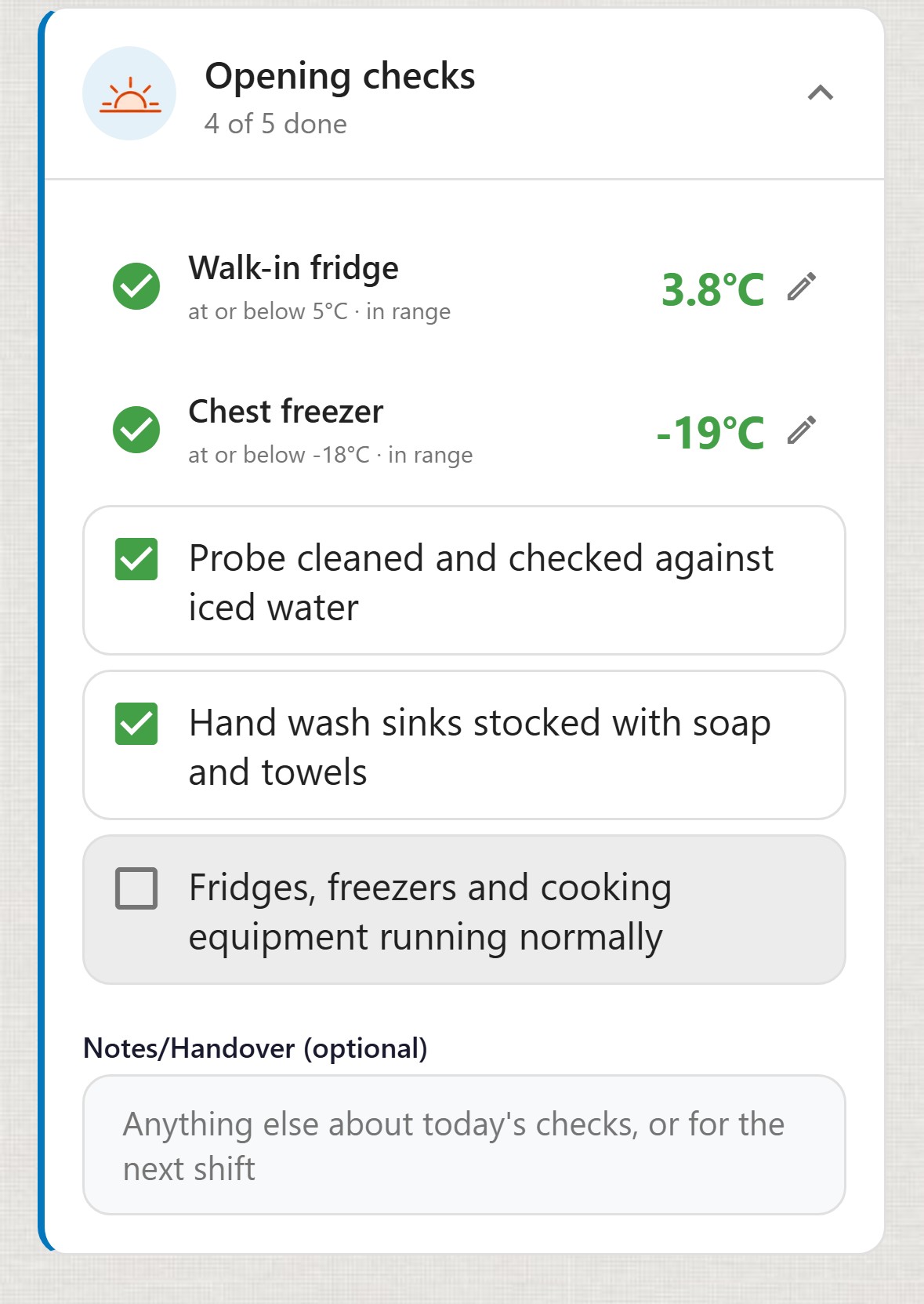
Opening checks, part done. This test kitchen's checklist uses its own wording, not the starter's. Any kitchen can edit, add or remove lines.
Which plan. Checklists come with Standard and Pro, and are open in the 14-day free trial. Repairs reports are on every plan.
Get ChefsRecords on the App Store (iPhone) ›
14 days free. No card required.
This page explains the law and guidance in plain words, from the public sources below as published on 24 October 2026. It is not legal advice. Your council's food team can answer questions about your own kitchen. ChefsRecords is not part of, or endorsed by, the Food Standards Agency, Food Standards Scotland or your local council.
In a restaurant, cafe, pub or takeaway, food hygiene law in all four UK nations asks for enough basins, in suitable places, kept for cleaning hands. Each needs hot and cold running water, something to clean hands with and a hygienic way to dry them. Where necessary, food must be washed somewhere else. Food vans, stalls, marquees and kitchens at home have a shorter rule: appropriate facilities for washing and drying hands hygienically.
In a restaurant, cafe, pub or takeaway: hot and cold running water, soap and a hygienic way to dry hands. Nothing else should be in it or in front of it. The FSA pack asks for liquid soap and, preferably, disposable towels, and for basins to be convenient and kept stocked. Vans, stalls and homes: ask your council what it accepts.
Not in a restaurant, cafe, pub or takeaway kitchen. The law says basins are to be designated for cleaning hands, and the councils we read expect the basin to be separate from the food and equipment sinks. A business run from home can be different: some councils accept one sink set aside for hands. Ask your council.
UK food law sets no number. It asks for an adequate number of hand basins, suitably located, plus facilities for washing equipment and, where necessary, food. As a general rule, Bromley council asks a small cafe, takeaway or restaurant for at least one double sink for equipment, a separate food sink where necessary, and hand basins. The "three sinks" and "three-compartment sink" rules you may read online are American. Your council decides for your kitchen.
For washing equipment in a small kitchen, the councils we read accept one. It does not replace a hand basin. The FSA pack says ideally use separate sinks for raw and ready-to-eat equipment. If one sink does both, change the water and clean and disinfect the sink, taps and fittings between uses.
The law says where necessary. The FSA pack says wash unwashed vegetables, salad and fruit in a separate, dedicated sink. Where that is not possible, clean and disinfect the sink first and use a bowl. Never wash food in the hand basin.
It can do part of the job. CookSafe in Scotland says a dishwasher that can heat-disinfect is the only acceptable way to clean raw and ready-to-eat equipment together. Councils still usually expect a sink as well: Dundee's home business page says this will generally mean a double sink, or a sink and a dishwasher. A dishwasher never replaces a hand basin.
In fixed premises, yes: the law says hot and cold running water. It sets no temperature. The FSA pack and Safe Catering say to wash in warm running water. The councils we read accept mixed water, and some accept warm water at a controlled temperature, so a mixer tap is a common answer. Ask your council if your set-up is unusual.
The law says "hygienic drying". The FSA pack, Safe Catering and CookSafe all point to disposable or single-use towels. Councils differ: Bassetlaw lists warm air dryers and washable fabric towels, while Bromley says "A cloth or fabric towel is not suitable". Our advice is paper towels at the kitchen basin, so you can turn the tap off with one.
No law requires them. CookSafe says to consider fitting taps you do not work by hand. If yours are turned by hand, turn them off with your paper towel.
The law asks for appropriate facilities for washing and drying hands, and enough hot and/or cold drinking water. Councils fill in the detail, and they differ. Some accept a portable unit filled with warm water and kept topped up, or an urn with containers of cold water. Bromley says do not rely on a kettle. A Scottish draft standard said jugs are not acceptable. Ask the council where your van is kept before you buy a unit.
Not as a rule. GOV.UK, the FSA pack, Safe Catering and CookSafe all say gel does not replace washing. It can be used after washing. One Northern Ireland council says wipes or gloves may be acceptable on a van or stall only where the open food is low risk, such as whole fruit or biscuits handled with utensils, or the food is fully wrapped, and its officers judge each case. Ask your council.
It depends on your council and on what you make. Guildford says you do not need to install a separate basin, but you must have appropriate hand washing facilities. Stratford-on-Avon says one sink of a one and a half sink can be set aside for hands, and a downstairs bathroom basin may be enough for some businesses. Dundee says you need a basin in the kitchen, for hand washing only. Ask your council before you start.
No source we read requires a "hand washing only" sign or sets a basin height. The law says basins must be designated for cleaning hands, and a sign is a simple way to show it. Safe Catering in Northern Ireland asks you to put its hand washing technique above the basin.
Your food safety plan should describe what your kitchen really does. The free food safety plan builder takes you through safe methods based on the FSA pack, so you can write them in your own words, then prints your plan or saves it as a PDF. For small restaurants, cafes, pubs and takeaways in England and Wales.
The cross-contamination guide, the kitchen cleaning schedule guide, the opening and closing checks guide, the first food hygiene inspection guide, the EHO inspection guide, the 4Cs of food hygiene guide, the staff sickness guide and the disinfectants guide.